Writing a Grant & Crowd Funding
Vision with structure. Passion with proof
Grants do not fund dreams
They fund aligned, organized, measurable impact
This article is about translating your project into the expected professional language
The First Truth
Alignment is everything
Before writing anything, ask:
Does this funder support public art?
Education?
Community engagement?
Cultural equity?
Environmental work?
Youth programs?
If your mission and their mission are not aligned,
you are wasting energy
Grants are not about convincing
They are about matching
Speak Institutional Language
You may think like an artist.
But you must write like a program director.
Instead of:
“This sculpture will explore human transcendence.”
Write:
“This public installation will activate underutilized civic space, engage 3,000+ visitors, and provide hands-on fabrication workshops for 40 emerging artists.”
Same project, different framing; consider what institutions usually think about:
Outcomes
Community benefit
Access
Inclusion
Documentation
Feasibility
Outcomes & Impact
If you can’t measure it, they can’t justify it
Strong proposals answer:
How many people will experience this?
Who are they?
What will they gain?
What changes because this exists?
Examples of measurable outcomes:
2,500 public visitors over 4 days
30 volunteers trained in large-scale fabrication
6 educational workshops
10 local vendors contracted
100,000 online impressions
3 local media mentions
Impact must be specific
Community Benefit
Who benefits besides you?
This is critical
Think about:
Local artists
Youth
Neighborhood businesses
Cultural groups
Volunteers
Festival attendees
Public space activation
If your project only benefits your portfolio,
it’s weak in grant terms
Grants fund ecosystems
Budget Clarity
Sloppy budgets kill proposals
Your numbers must:
Match your narrative
Show realistic labor costs
Include contingency
Reflect fair pay
Avoid random rounding
If your budget looks chaotic,
they assume your production will be chaotic
Remember:
Grants support organized projects,
not emotional passion
Feasibility Signals
Funders look for signals that you are capable:
Past projects
Team bios
Engineer involvement (if needed)
Letters of support
Partnerships
Timeline clarity
Permits in progress
Documentation strategy
They are investing in execution capacity
Burning Man, Festivals & Grant Cycles
Many festivals (including Burning Man–style ecosystems) have internal grant programs
They often prioritize:
Interactivity
Participation
Community building
Radical inclusion
Leave No Trace
Safety planning
Study their values carefully
Mirror language intentionally
The Alignment Test
Before submitting, ask:
Does this sound like me?
Does this sound like them?
Where do those overlap?
That overlap is where funding happens
Ongoing Fundraising Is Normal
Even with grants, you will likely need:
Supplementary fundraising
Ticket revenue
Merchandise
Sponsor support
Community backing
Grants are rarely 100%.
Build layered funding
Engagement Infrastructure
Don’t disappear after submission
Build audience continuity:
WhatsApp groups for volunteers
Email newsletter updates
Instagram build progress
Behind-the-scenes stories
Open build days
Video documentation
Public timeline updates
Transparency builds trust
Trust builds momentum
Momentum attracts funding
Audience Is Leverage
If you can say:
“We have 4,000 engaged subscribers.”
“Our build updates average 10,000 views.”
“We host monthly community meetups.”
You are no longer an isolated artist
You are a cultural organizer
That changes how institutions see you
Structure of a Strong Proposal
1. Executive Summary
Clear, concise, compelling
2. Project Description
What it is
Where it lives
Who it engages
3. Community Impact
Specific groups served
Why it matters now
4. Implementation Plan
Timeline
Team
Partners
Permits
5. Budget
Clear. Structured. Realistic
6. Documentation Plan
Photos, video, media strategy
7. Sustainability / Future Vision
What happens next?
The Emotional Discipline
Rejection will happen
It is not personal
It is positioning
Revise
Resubmit
Realign
Professional artists treat grant writing as a skill
not a lottery ticket
Reflection
Does my proposal sound visionary AND realistic?
Is my impact measurable?
Who benefits besides me?
Am I aligned with the funder’s mission?
Does my budget look credible?
What engagement system supports this long term?
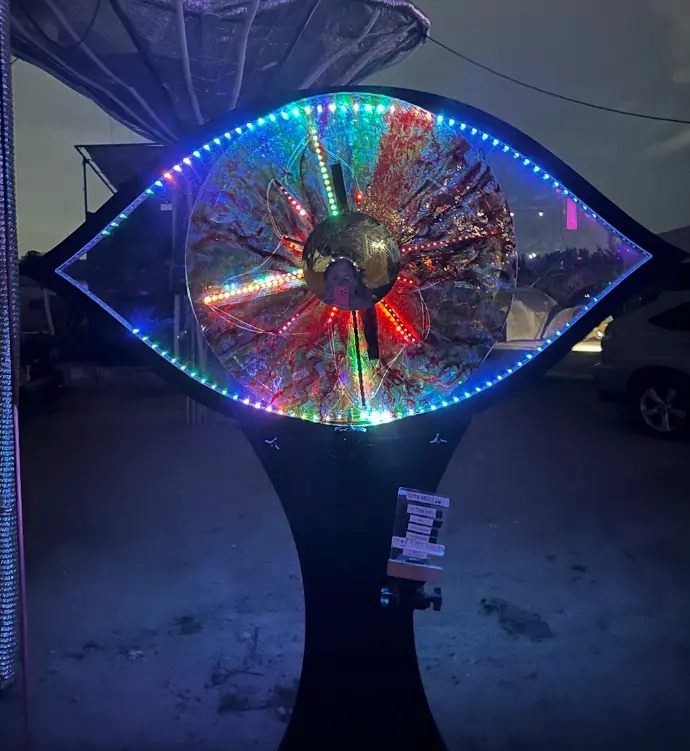
The Eye
Sofia Monserrat
Action Challenge
Choose one real grant this week, it can be an open grant to potentially apply to, or one from the past
Rewrite your project description using their language, as a practice exercise, or with intentions to submit
Ask one experienced builder or organizer to review it
Community feedback strengthens institutional proposals
Clear scope
Impact metrics
Community angle
Budget clarity
Assignment:
Draft a real grant application.
There are no comments for now.
to be the first to leave a comment.