
Peace as the absence of conflict is merely poetic, far from pragmatic
It is a beautiful phrase, easy to repeat in speeches or write in manifestos. But if peace is defined only as silence, only as the moment when disagreement disappears, then it becomes fragile. The first tension breaks it. The first misunderstanding dissolves it.
Real peace is not silence
Real peace is construction
Peace is what we build when conflict inevitably arrives
To speak about peace seriously means moving from metaphor to infrastructure: from philosophy to tools, from ideals to practices that allow people to disagree, struggle, and still remain part of a shared community
Peace is not the absence of friction
Peace is the capacity to metabolize it
Building Peace, Literally
One of the most important lessons about peace does not come from theory but from action
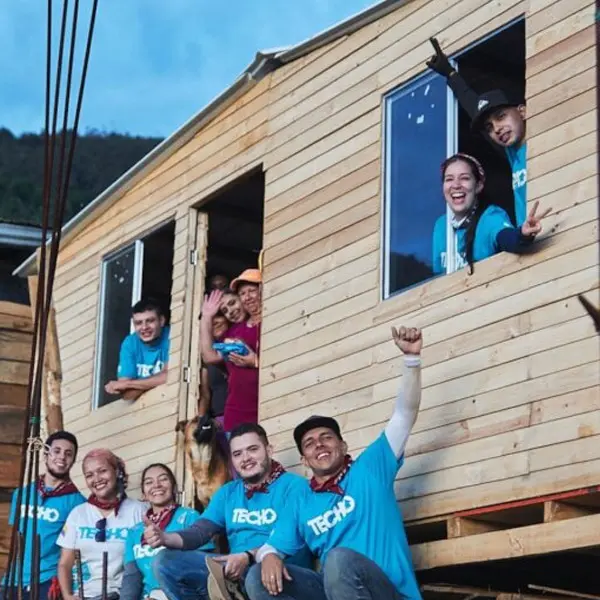
For many of us in Latin America, volunteering with organizations like Un Techo para Mi País was not only about building houses. It was about building community in the most literal sense
A group of strangers arrives in a neighborhood. Students, professionals, local residents, people from different social classes and regions. For a weekend, or sometimes longer, they coordinate labor, share food, improvise solutions, and work toward a common goal: creating a physical structure that offers dignity and protection
But something else emerges in the process
People who would normally never meet begin to understand each other. Conversations replace stereotypes. Cooperation replaces distance
A small wooden house appears, yes, but also something less visible: a temporary society organized around solidarity rather than hierarchy
Peace often begins this way. Not as an abstract principle, but as a shared task
To build together is one of the oldest technologies of reconciliation
The Pacific: A Geography That Teaches
In the Colombian Pacific, peace has never been a naive idea
The region has lived through historical violence, economic neglect, and environmental challenges. Yet its communities, Afro-descendant, Indigenous, and mestizo, developed forms of resilience that reveal another dimension of peace
Music organizes the community
Food gathers the community
Oral storytelling transmits memory across generations
The marimba is not just an instrument. The drum is not only rhythm. They are social infrastructure, ways to hold a community together even when the world around it is unstable
The Pacific Ocean itself is a powerful metaphor
It is not always calm. Its tides rise, storms arrive, tectonic plates move beneath its surface. And yet we call it “Pacific.”
Perhaps because peace does not mean the absence of movement
It means knowing how to navigate it
Shalom: Peace as Wholeness
In another tradition, the Hebrew word shalom offers a complementary understanding of peace
Shalom is often translated simply as “peace,” but its meaning is deeper. It implies wholeness, completeness, integrity, the condition in which different parts can coexist without destroying each other
In this sense, peace is not about eliminating difference. It is about creating structures that allow difference to remain without collapsing into violence
It is important to remember something else as well: for many people, war is not a metaphor
It is memory
It is displacement
It is trauma carried in the body
When we speak about peace, we must acknowledge that some individuals carry experiences of conflict that cannot be resolved by slogans or optimism. Peace requires strength. It requires boundaries. It requires respect for circumstances that may limit what reconciliation looks like in practice
Sometimes peace means dialogue
Sometimes it means distance
Sometimes it means protection
Peace without boundaries can become vulnerability
Peace with wisdom becomes stability
From Tradition to Practice
If we bring these lessons together, the communal resilience of the Pacific, the philosophical depth of shalom, the practical solidarity of collective construction, we arrive at a crucial question:
How do we design environments where conflict does not destroy community?
In creative and multicultural spaces, festivals, activist gatherings, artistic collaborations, international communities; conflict is inevitable. People arrive with different cultural backgrounds, political beliefs, personal histories, and emotional landscapes
Fatigue, stress, substances, misunderstandings, and trauma can all intensify these tensions
Ignoring conflict does not create peace
Preparing for conflict does
This is where peace becomes operational
Communities that take peace seriously invest in tools such as:
Mediation processes
Consent culture and communication training
Harm-reduction practices
Facilitated dialogue circles
Conflict resolution education
Post-conflict integration and repair
These practices transform peace from a moral aspiration into a set of learnable skills
Peace becomes something people practice, not just something they wish for
Trauma and the Reality of Conflict
Another essential dimension of peace work is acknowledging the psychological and historical burdens people carry
Many individuals in global communities are migrants, refugees, survivors of political instability, or descendants of populations that have experienced displacement and violence
Trauma changes how conflict is perceived. A disagreement that seems minor to one person may feel existential to another
This is why peace requires both empathy and structure
Communities need emotional intelligence, but they also need clear protocols. Leadership that understands when to facilitate dialogue and when to enforce boundaries. Spaces where people can express themselves without fear, but also without harming others.
Without structure, peace becomes chaos
Without empathy, structure becomes domination
Peace is the art of balancing the two
Multiculturalism as Training
Multicultural environments are often celebrated for their diversity, but diversity alone does not guarantee harmony
In fact, diversity increases the probability of friction
Different languages, religions, political views, artistic expressions, and cultural norms inevitably collide. But this friction is not necessarily a problem. It can be a powerful engine for creativity and collective learning
When communities develop the capacity to manage conflict constructively, diversity becomes a strength rather than a liability
Travel, artistic collaboration, communal living, and global activism all function as laboratories where people practice this capacity
Peace emerges not from avoiding difference, but from learning how to remain in relationship despite it
Peace as a Revolutionary Discipline
In a world where political and media systems often profit from division, polarization, and outrage, choosing to invest in peace-building practices becomes a countercultural act
Peace is not passive
It is disciplined
It requires education, leadership, patience, and collective responsibility
It asks communities to develop emotional maturity and organizational intelligence. It demands that people learn how to listen, how to apologize, how to defend themselves without destroying others
Peace is not a moment
It is a continuous process
Like the ocean that never stops moving
Like a city that dreams of wholeness
Like a child learning, slowly, imperfectly, how to resolve conflict with creativity rather than violence
Peace is not the absence of conflict
Peace is the daily decision to create the conditions that allow human beings to move through conflict without losing their humanity